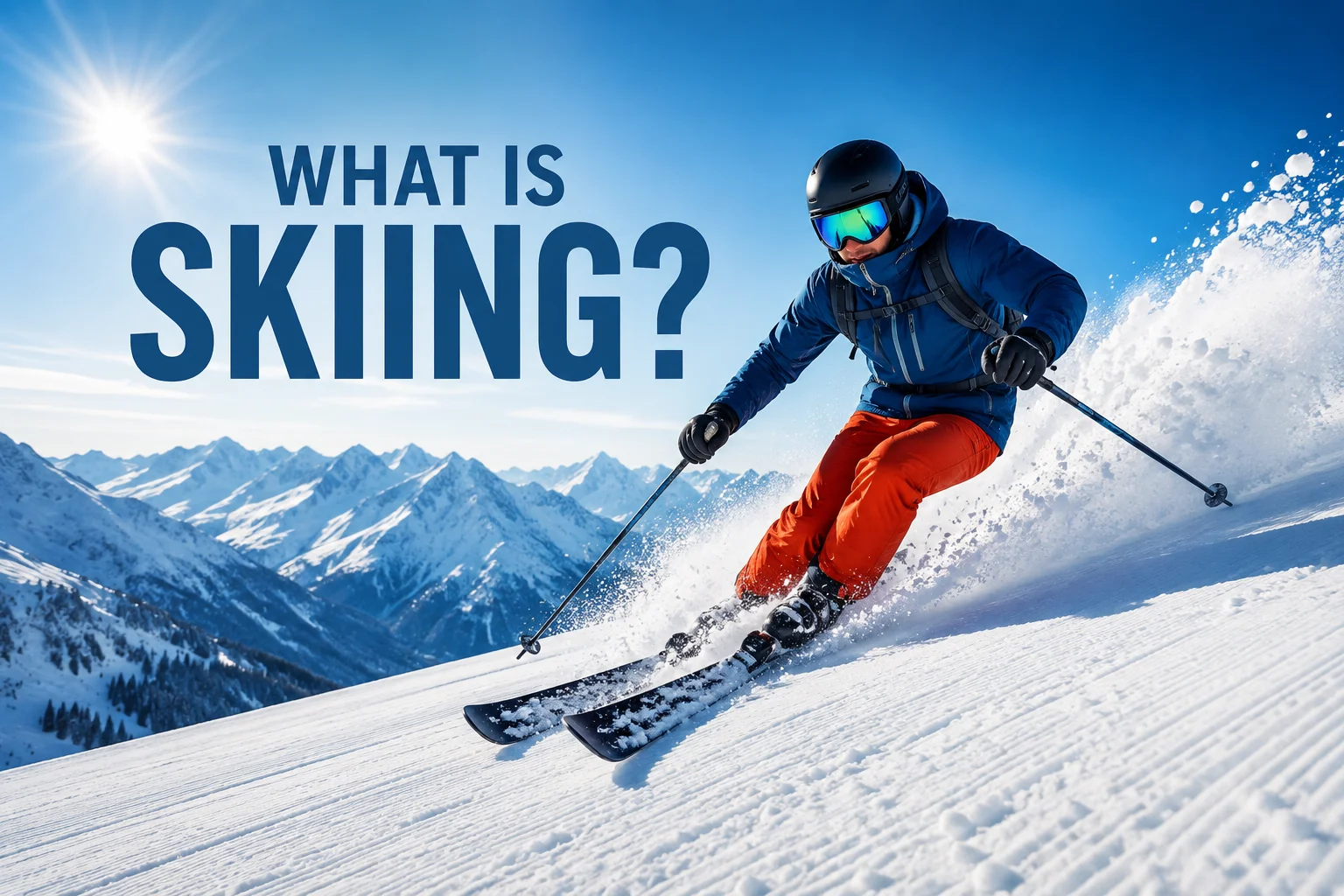
This guide covers what skiing is, how it developed, how to get started, the gear you'll need, safety essentials, and the many forms the sport takes today.
What Is Skiing
Skiing is the activity of moving across snow on a pair of long, narrow skis attached to boots, allowing the skier to glide, turn, and control speed. It can happen downhill on groomed resort runs, across flat terrain in cross-country skiing, or off-trail in ungroomed backcountry snow. The ski base reduces friction so the skier can glide, while metal edges dig into the snow for grip, letting the skier steer and stop. Skiing is practiced recreationally, competitively, and as an Olympic sport family that includes alpine, cross-country, freestyle, and ski jumping disciplines.
A Brief History of Skiing
Skiing is far older than most people realize. Archaeological finds, including ski fragments in Scandinavia and rock carvings in northern Asia, show people using ski-like devices for hunting and transport thousands of years ago, with some evidence dating back roughly 6,000 years. The word "ski" comes from the Old Norse skíð, meaning a split piece of wood.
Norway's Telemark region is widely credited as the birthplace of skiing as a sport. In the mid-1800s, Norwegian skier Sondre Norheim pioneered improved ski and binding designs that made turning far easier than earlier flat boards, earning him the title "father of modern skiing." From there, skiing spread through Europe and North America, shifting from a utilitarian activity into recreation. Resorts, chairlifts, and ski schools turned it into a global industry, and it's been part of the Winter Olympics since 1924.
How Skiing Works
- Gliding: A ski's smooth base reduces friction, letting gravity pull the skier forward and downhill.
- Edging: Metal edges bite into snow, giving grip for steering and stopping.
- Balance: Skiers shift weight between skis to initiate turns and absorb terrain.
- Bindings: These connect boot to ski and are designed to release in a hard fall, reducing injury risk.
How to Ski for Beginners
Structured lessons beat trial and error. A typical progression:
- Get comfortable walking in skis on flat ground and practice standing back up after a fall.
- Learn the wedge ("pizza") position — tips pointed together — to control speed and stop.
- Practice on the bunny slope, a gentle area built for beginners.
- Learn to turn, first from the wedge and later with parallel skis.
- Move to chairlifts and longer green (easiest) runs once you can stop and turn confidently.
Basic Skiing Techniques
- Wedge turns: The beginner foundation for controlling speed.
- Parallel turns: Skis stay parallel for more speed and efficiency.
- Carving: An advanced technique where the edge cuts a clean arc instead of skidding.
- Pole planting: Helps time turns, especially on steeper terrain.
- Weighting and unweighting: Shifting pressure between skis to initiate smooth turns.
Basic Rules and Slope Etiquette
Resorts follow safety codes based on the FIS (International Ski Federation) Rules of Conduct, adapted by national bodies like the U.S. National Ski Areas Association into a "Responsibility Code." Core principles: stay in control at all times; yield to skiers below or ahead of you; look uphill before entering a trail or starting downhill; stop only where visible and out of the way; use equipment that prevents runaway skis; obey trail signs and closures; never ski impaired by alcohol or drugs; and exchange contact information if you're involved in a collision.
How to Avoid Crowded Ski Slope
- Hit the slopes in the first hour or two after lift opening.
- Check trail maps for longer or slightly harder runs, which see less traffic.
- Avoid mid-mountain lifts during peak lunch hours.
- Ski weekdays or shoulder season instead of weekends and holidays.
- Use resort apps that show real-time lift and trail wait times.
Skiing Safety
Wear a properly fitted helmet, dress in layers, and choose runs that match your skill level using the resort's color-coded difficulty ratings. Warm up beforehand, stay hydrated, and take breaks, since cold and altitude add to fatigue. Check avalanche and weather advisories before any off-piste terrain, and never ski alone in remote areas. Know where the nearest ski patrol station is on any unfamiliar mountain.
How to Choose Ski Equipment
- Skis: Shorter, softer-flexing skis are easier for beginners; longer, stiffer skis reward speed and stability.
- Boots: A snug, pain-free fit matters more than brand — poor fit is the top cause of a bad first day.
- Bindings: Have a certified technician set the release (DIN) value based on your height, weight, and ability.
- Poles: Sized so your elbow forms roughly a 90-degree angle with the tip on the ground.
- Helmet and goggles: Non-negotiable for protection from impact, wind, and glare.
- Outerwear: Waterproof, breathable layers plus moisture-wicking base layers.
Beginners are almost always better off renting, since shops can match gear to skill level and adjust it properly.
Different Types of Skiing
- Alpine (downhill) skiing on groomed or off-piste terrain with fixed-heel bindings.
- Cross-country (Nordic) skiing across flat or rolling terrain with free-heel bindings.
- Freestyle skiing, including moguls, aerials, and slopestyle.
- Ski jumping, launching off a steep ramp for distance and style.
- Telemark skiing, a free-heel technique with a distinctive bent-knee turn.
- Backcountry and ski touring in unmarked, ungroomed terrain.
- Water skiing, a summer variant towed behind a boat rather than gliding on snow.
What Is Alpine Skiing
Alpine skiing, or downhill skiing, is the most widely practiced form of skiing and what most people picture at a resort. It uses bindings fixed at both the toe and heel, keeping the boot firmly attached throughout the descent. This setup, which originated in the European Alps, gives skiers more control at speed and while carving, making it the standard for resort skiing and Olympic disciplines like slalom and downhill.
What Is Backcountry Skiing
Backcountry skiing means skiing on unmarked, unpatrolled terrain outside a resort's boundaries or in remote wilderness with no lift access. Unlike groomed alpine runs, it isn't monitored by ski patrol, so skiers handle their own route-finding and safety. Access can involve hiking uphill on climbing skins, or reaching terrain by lift, snowcat, or helicopter. Because avalanche risk is real, skiers should carry a transceiver, probe, and shovel, and learn avalanche awareness before heading beyond resort boundaries.
What Is Heli-Skiing
Heli-skiing uses a helicopter, instead of a chairlift, to reach remote, often untouched mountain terrain. The concept dates to the 1950s, when helicopters were first used in Canada and later Alaska and Europe to access backcountry slopes. Because it opens up vast, ungroomed powder far from resort boundaries, heli-skiing is generally recommended for intermediate-to-advanced skiers, and it's typically guided by professionals trained in avalanche safety.
How to Train for Skiing
- Leg strength: Squats, lunges, and step-ups build the strength needed for turning.
- Core stability: Planks and rotational work support balance on uneven snow.
- Cardio: Skiing is more demanding at altitude, so aerobic fitness reduces fatigue.
- Balance: Single-leg exercises mimic the shifting weight demands of skiing.
Starting four to six weeks before a trip gives your body time to adapt.
How to Build Confidence While Skiing
Master the basics before advancing rather than rushing onto harder terrain. Take lessons at every level, not just as a beginner. Ski slightly below your comfort zone on tricky days, and push your limits when conditions and energy are good. Focus on technique over speed, ski with supportive partners, and expect to fall — it's a normal, manageable part of learning.
How to Prepare for Skiing Trips
Book accommodation and lift tickets early, especially during peak weeks. Check snow reports and weather in the days before you travel. Arrange or service equipment ahead of time to skip resort-day queues. Pack in layers, plan for altitude adjustment if traveling from low elevation, and consider travel insurance that covers snowsport injuries. On multi-day trips, build in a rest day to avoid overuse injuries.
How to Maintain Ski Gear
Wax bases regularly to protect them and maintain glide. Check bindings each season to confirm the release setting still matches your weight and ability. Dry boots and liners fully after each use to prevent mildew, and store skis and boots in a cool, dry place away from heat.
How to Sharpen Ski Edges
- Clean the base and edges to remove old wax, dirt, and rust.
- Use an edge-tuning guide and file set to the correct bevel — most recreational skis run between 85 and 90 degrees, depending on preference and conditions.
- File in one direction, tip to tail, with light, even pressure.
- Smooth the edge with a fine stone to remove burrs.
- Wipe away filings and check for a consistent edge along the full length.
Many skiers get a professional tune once or twice a season and do light touch-ups themselves between visits.
Skiing vs. Snowboarding
| Factor | Skiing | Snowboarding |
|---|---|---|
| Stance | Feet separate, facing forward | Feet fixed sideways on one board |
| Learning curve | Easier initial balance | Harder at first, clicks faster once standing is mastered |
| Turning | Two independent skis and poles | Edge control on a single board |
| Terrain feel | Efficient on groomed runs | Strong in powder and terrain parks |
Is Snowboarding Harder Than Skiing
For most beginners, snowboarding has a steeper initial learning curve — balancing sideways on a single board with both feet fixed together feels unfamiliar and often leads to more early falls. Skiing tends to be easier to stand and move on right away, since each foot works independently. That said, many instructors note that once a snowboarder can link basic turns, progress often speeds up, while some skiers plateau longer at the wedge-to-parallel stage. Difficulty ultimately comes down to individual balance and comfort with falling.
What Does Apres Ski Mean
Après-ski is French for "after ski," referring to the food, drinks, and socializing that happen once the lifts close. It originated in the Alps and grew alongside skiing's commercialization in the mid-20th century. Today, après-ski culture ranges from a relaxed hot drink by a lodge fireplace to lively bars with live music at major resorts — and for many travelers, it's as much a part of the trip as the skiing itself.
How to Avoid Water Ski Accidents
Water skiing is a completely different sport from snow skiing — it involves being towed across water behind a boat rather than gliding downhill on snow. Staying safe depends on teamwork:
- Always wear a properly fitted life jacket rated for water sports.
- Use a boat with both an operator and a separate observer, since one person can't safely drive and watch the skier at once.
- Learn standard hand signals for speed and direction.
- Display a brightly colored ski flag whenever a skier is down in the water.
- Ski in open water away from swimmers, docks, and shallow areas.
- Never water ski under the influence of alcohol.
General Advice for Becoming More Confident at Skiing
Skiing rewards patience more than raw athleticism. Skiers who improve fastest take lessons seriously, ski regularly rather than in occasional bursts, and stay honest about their skill level when choosing terrain. Properly fitted equipment and treating rest as part of training both pay off over a season. Whether your goal is cruising blue runs confidently, exploring the backcountry, or simply enjoying a day on the mountain, skiing keeps offering something new to work toward, no matter how experienced you become.
Be the first to comment!