
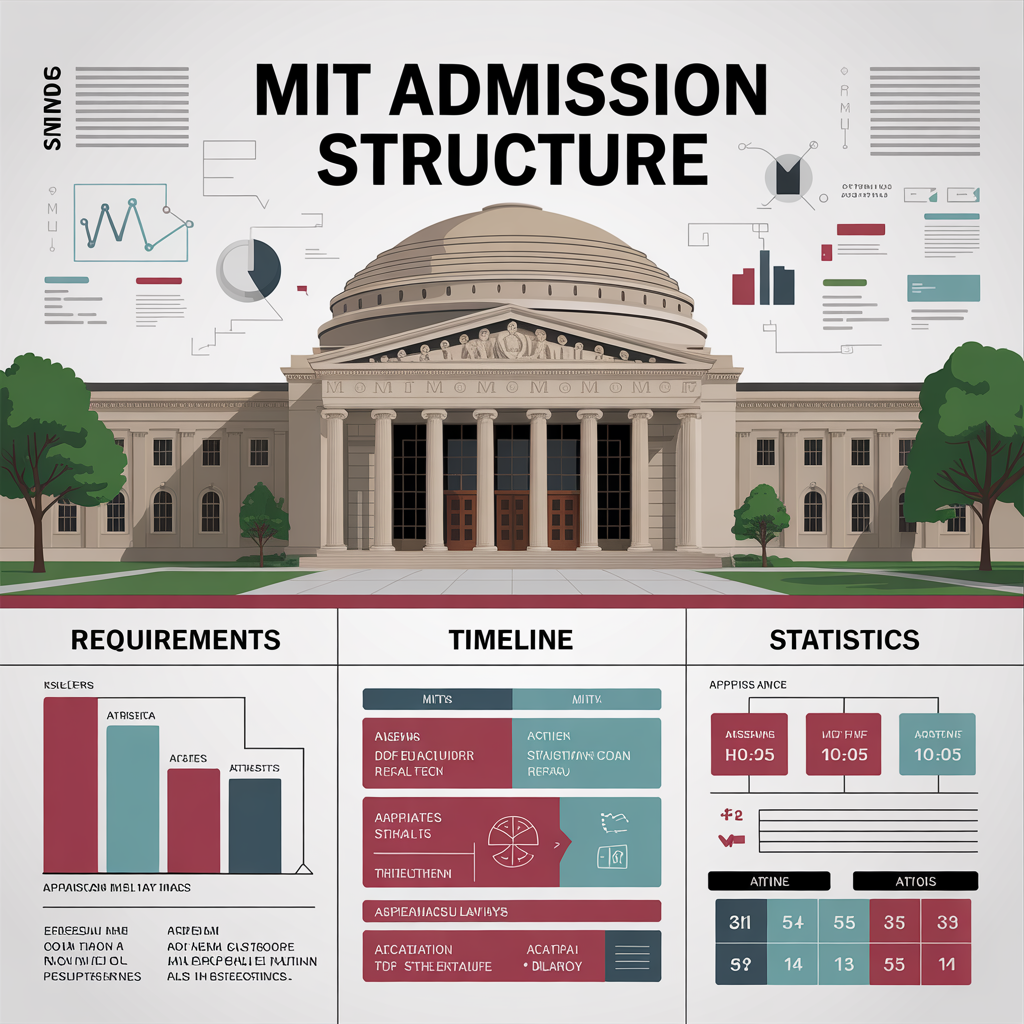
The Massachusetts Institute of Technology (MIT) is one of the most prestigious science and technology universities in the world. Located in Cambridge, Massachusetts, MIT is globally recognized for innovation, research excellence, and leadership in engineering, computer science, and applied sciences. Each year, thousands of highly talented students apply from around the world, making admission extremely competitive. The admission structure of the Massachusetts Institute of Technology (MIT) is carefully designed to identify students who demonstrate academic strength, creativity, curiosity, and a passion for solving real-world problems. This article explains MIT’s admission system, eligibility requirements, application process, evaluation criteria, and financial aid opportunities. Admission Structure of the Massachusetts Institute of Technology (MIT)
Overview of MIT Admissions
MIT follows a holistic admission process, meaning the institute evaluates applicants beyond grades and test scores. The MIT admission framework focuses on academic preparation, problem-solving ability, innovation, leadership, and personal character.
MIT offers admission to:
- Undergraduate degree programs
- Graduate and doctoral programs
- Specialized professional and research programs
This article mainly discusses the undergraduate admission structure, which attracts the highest number of applicants globally.
Eligibility Requirements for MIT Admission
MIT does not set a minimum GPA or rank requirement, but admitted students typically have outstanding academic backgrounds.
Academic Qualifications
Applicants must:
- Complete high school or equivalent education
- Excel in advanced courses, especially in mathematics and science
- Show strong preparation in physics, chemistry, and analytical subjects
International students must hold qualifications equivalent to a U.S. high school diploma.
English Language Proficiency
MIT requires students to demonstrate strong English reading, writing, and communication skills. International applicants may submit evidence through academic performance or standardized testing if required.
MIT Application Process
The MIT admission process is completed entirely online through the official MIT application portal. Unlike many universities, MIT does not use the Common Application.
Application Plans
MIT offers two admission options:
- Early Action (EA)
- Regular Action (RA)
Early Action allows students to apply early and receive decisions sooner, while Regular Action gives more preparation time.
Required Documents for MIT Admission
The MIT admission structure requires several key documents to evaluate each applicant fairly.
Academic Records
Applicants must submit:
- High school transcripts
- School report and counselor evaluation
- Mid-year academic updates
These documents help MIT assess academic consistency and course rigor.
Standardized Test Scores
MIT has reinstated the SAT/ACT requirement, making standardized test scores mandatory for admission. These scores help MIT evaluate academic readiness across diverse educational systems.
Letters of Recommendation
MIT requires:
- Teacher recommendations (especially from science and math instructors)
- Counselor recommendation
These letters provide insight into the applicant’s intellectual curiosity, classroom engagement, and character.
Essays and Short Answers
MIT essays are a critical part of the MIT admission criteria. Through short-answer questions, applicants explain their interests, challenges, goals, and motivations. MIT values authenticity, problem-solving mindset, and creativity in responses.
MIT Admission Evaluation Criteria
MIT uses a comprehensive evaluation system that considers multiple factors. The MIT selection process focuses on the following areas:
Academic Excellence
Strong grades in advanced coursework demonstrate readiness for MIT’s rigorous academic environment.
Passion for Science and Technology
MIT looks for students who show genuine enthusiasm for science, engineering, technology, and innovation.
Problem-Solving Skills
Applicants who enjoy tackling complex challenges, research projects, or competitions stand out.
Extracurricular Activities
Meaningful involvement in robotics, coding, research, Olympiads, community service, and leadership programs is highly valued.
Personal Qualities
MIT seeks students who demonstrate collaboration, resilience, curiosity, and ethical responsibility.
Interview Process at MIT
After submitting the application, many students are invited for an MIT alumni interview, depending on availability. The interview is conversational and focuses on understanding the applicant’s personality and interests.
Topics often include:
- Academic passions
- Extracurricular involvement
- Future goals
- Reasons for choosing MIT
Although interviews are not guaranteed, they play an important role in the holistic evaluation process.
Financial Aid and Scholarships at MIT
MIT is committed to affordability and accessibility through its generous need-based financial aid program.
Financial Aid Highlights
- Need-blind admission for all applicants
- Full demonstrated financial need met
- No merit-based scholarships, only need-based aid
Families with lower incomes may receive full tuition coverage, including housing and meals.
Admission Timeline for MIT
Understanding deadlines is essential for a successful application.
Key Admission Dates
- Early Action deadline: November
- Regular Action deadline: January
- Admission decisions released: March
- Enrollment confirmation deadline: May
Applicants should regularly check official announcements to stay updated.
Acceptance Rate and Competition Level
MIT has one of the lowest acceptance rates among global universities. Thousands of academically gifted students apply each year, but only a small percentage are admitted. This high level of competition reflects MIT’s academic standards and global reputation.
Despite the competitiveness, MIT encourages students from all backgrounds to apply and values diverse perspectives.
Tips to Improve Your MIT Admission Chances
Due to the highly selective nature of MIT, students should prepare strategically. Below are helpful tips for success in the MIT admission process:
- Take the most challenging math and science courses available
- Participate in research, coding, robotics, or science competitions
- Demonstrate problem-solving and innovation skills
- Write clear, honest, and thoughtful essays
- Show collaboration and leadership qualities
- Prepare well for standardized tests
MIT values students who enjoy learning, experimenting, and building solutions.
Why Choose MIT
MIT offers a unique learning environment that emphasizes hands-on education, research, and real-world problem solving. Its strong focus on entrepreneurship, global impact, and interdisciplinary learning makes MIT an ideal choice for students passionate about science and technology.
Graduates of MIT often become leaders in engineering, business, research, and innovation worldwide.
Conclusion
The Admission Structure of the Massachusetts Institute of Technology (MIT) reflects the institute’s mission to educate students who will advance knowledge and serve society. MIT looks beyond academic scores to identify individuals who are curious, creative, and motivated to solve complex challenges. By understanding the eligibility criteria, application process, evaluation system, and financial aid opportunities, applicants can prepare a strong and competitive application.
With dedication, passion, and thoughtful preparation, aspiring students can increase their chances of gaining admission to one of the world’s top technology universities.
If you want, I can:
- Rewrite this article with SEO or Pinterest-optimized keywords
- Shorten it to 600–800 words
- Write similar articles for Harvard, Stanford, Yale, or Princeton